
What is Vaudeville?
Vaudeville began in the United States in the late eighteen hundreds and had amassed a global following by the roaring 20’s. Its name is often attributed to the French phrase voix de ville or 'voice of the city'. Vaudeville was created to bring together skilled performers from a variety of specialties, offering audiences a diverse range of entertainment under one roof (or tent). Over the course of its popularity, Vaudeville included acts from over 25,000 performers across the United States. Some traveled together in Vaudeville Troupes while others chose to find a home in a local performance venue and became a household name.
vaude·ville
/ˈvôd(ə)ˌvil/
noun
noun: vaudeville
a type of entertainment popular in the US in the early 20th century, featuring a mixture of specialty acts such as comedy, song, and dance.

-
Vaudeville starts were some of the first to cross racial, gender and class boundaries in a way not previously seen before. While prejudice was still prevalent on and off the stage, A Vaudeville performance included a diverse cast of performers all ready to entertain together.
-
Think of a variety show you recently watched on TV. Are you a fan of SNL? THAT is modern Vaudeville. A rotating cast of talented artists across different backgrounds coming together to perform comedy and music that defies genres? A brilliant legacy for the art of Vaudeville.
The huge variety of late night shows such as David Letterman, the Carol Bernett Show, The Tonight Show. Even competition shows like America’s Got Talent all have their roots in Vaudeville.
-
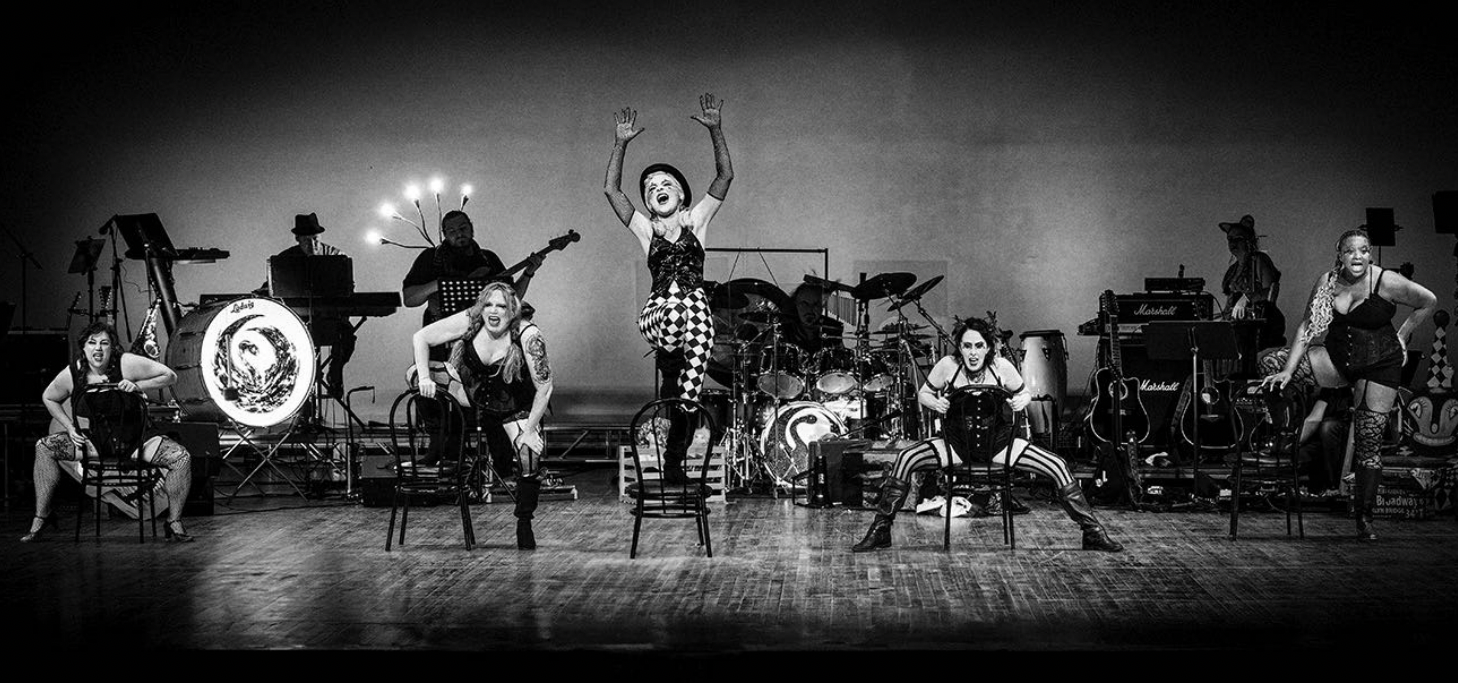
We want to bring the term “Vaudeville” back and celebrate all it has given us. We do this by creating our own Vaudevilles filled with a variety of music styles, with a live band, dance performances, comedy and even aerial arts! Our goal is for the audience to be kept on the edge of their seat, never knowing what comes next.
We hope you join us in celebrating this groundbreaking art form by spreading the word about Vaudeville and joining us to see what a modern Vaudeville can be!
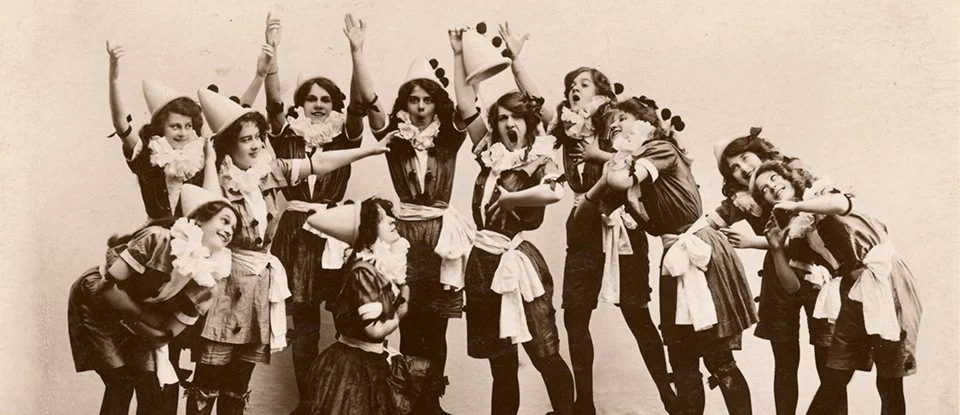

A typical Vaudeville performance had at least twelve acts. Ranging from different musical artists to comedy, to acrobats and contortionists, there were few limits on what could be performed.
The beauty of the Vaudeville was that the audience never knew what they would see next, and the show was different every time.

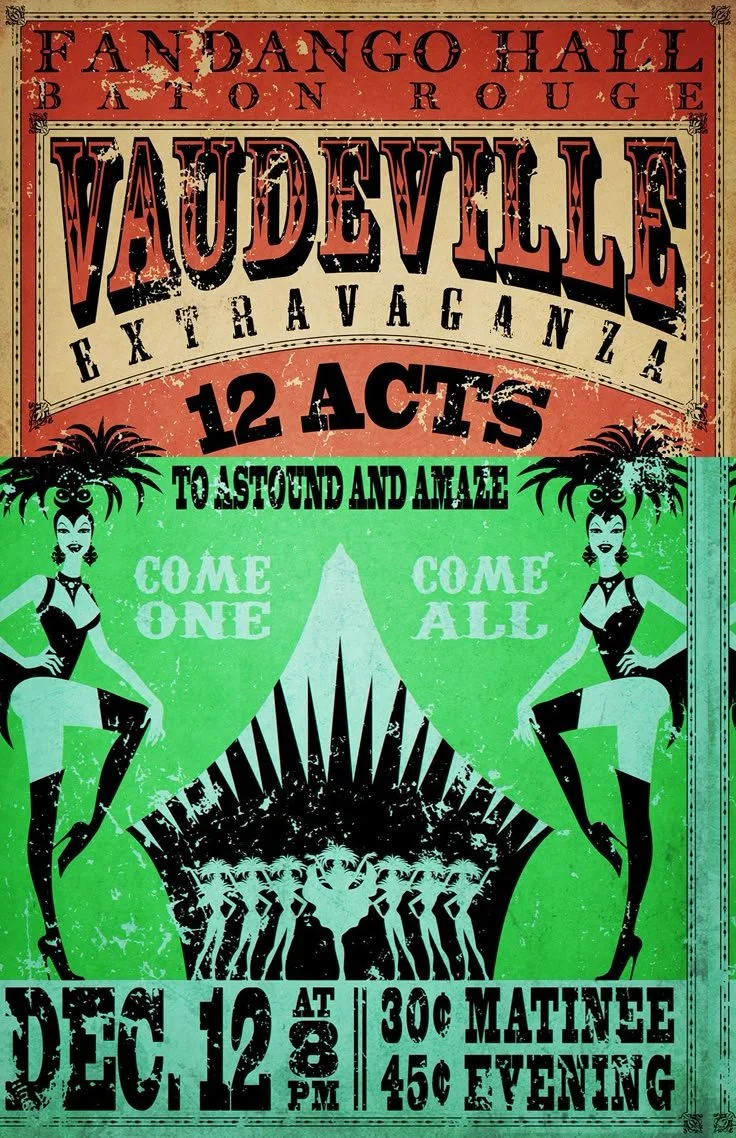
Gone, but not forgotten.
The invention of the silver screen, and the rise of Broadway brought about the end of the golden era of Vaudeville. However, it left its mark in surprising ways.
Some of your favorite classic stars such as: Harry Houdini, Burt Williams, Buster Keaton and Charlie Chaplin all became famous on a Vaudeville stage and many of their acts were then immortalized on the silver screen.

For more information on Vaudeville here are some great resources!
https://www.pbs.org/wnet/americanmasters/vaudeville-about-vaudeville/721/
https://en.wikipedia.org/wiki/Vaudeville
https://travsd.wordpress.com/2017/06/05/the-ten-most-influential-vaudevillians-of-all-time/
https://www.broadwayworld.com/article/What-Was-Vaudeville--A-Brief-History-20240331